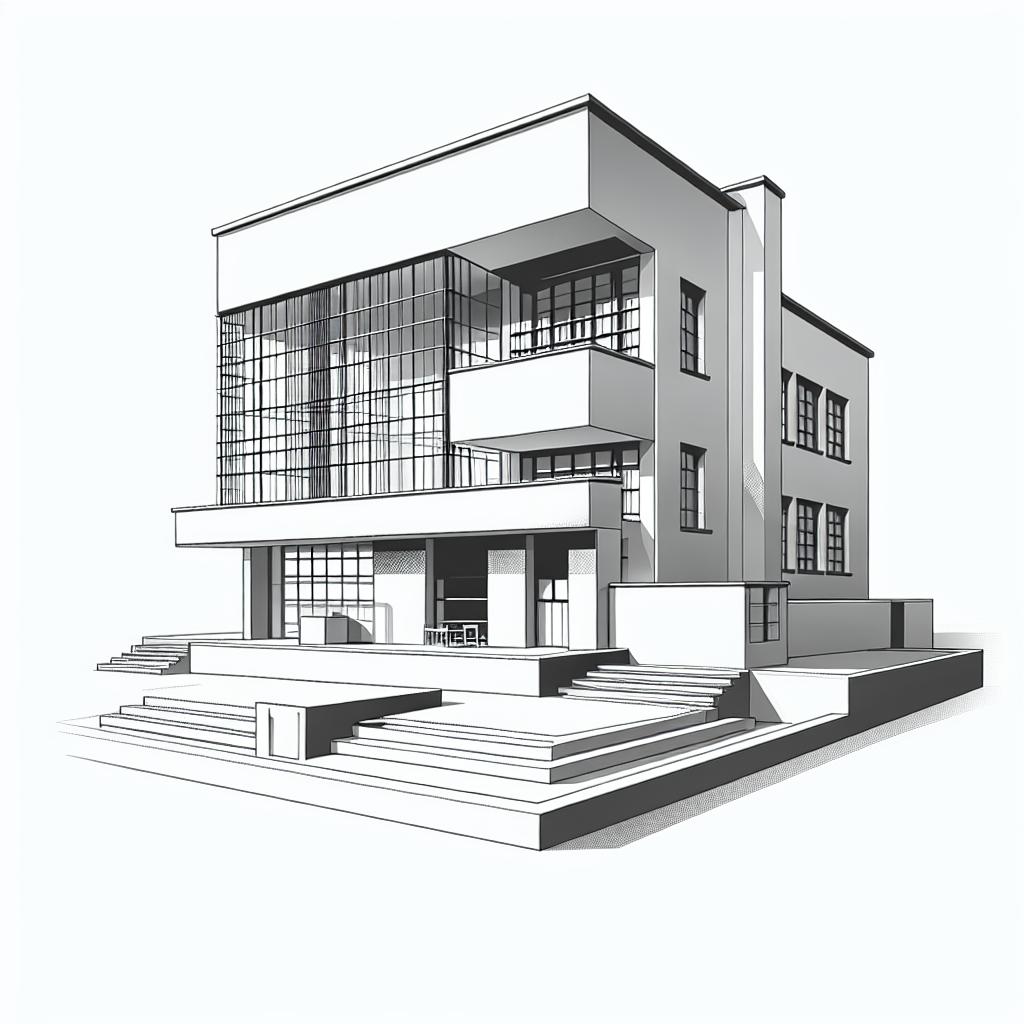
### Understanding Bauhaus Architecture Bauhaus architecture represents a paradigm shift in design principles, blending artistry and functionality like never before. Emerging in the early 20th century, the Bauhaus school revolutionized how architecture was perceived, emphasizing simplicity, practicality, and a harmonious relationship between aesthetics and materials. This blog post delves into the vital elements that define Bauhaus architecture. We’ll explore its chronology, highlighting key events and influences; introduce the pioneering figures who shaped its visionary approach; and reflect on essays and works that captured the essence of Bauhaus ideals. Additionally, we will focus on essential keywords that encapsulate its defining features. Through this exploration, we aim to provide a comprehensive understanding of Bauhaus architecture, renowned for its lasting impact on modernist principles and its enduring influence on contemporary design. ### Chronology The origins of Bauhaus architecture trace back to 1919 in Weimar, Germany, when architect Walter Gropius founded the Staatliches Bauhaus, an innovative art school dedicated to merging crafts and the fine arts. This institution marked a pivotal moment in architectural history, combining diverse artistic disciplines to foster a new design philosophy. By unifying technology, craftsmanship, and art, the Bauhaus initiated a movement that would redefine modern architecture. In 1925, the Bauhaus relocated to Dessau, due to political pressures, where it continued to flourish under the directorship of Gropius and later Hannes Meyer. It was in Dessau that the school’s architectural legacy reached its zenith, encapsulated in the Bauhaus Building, designed by Gropius himself. This period saw the refinement of the Bauhaus approach, emphasizing geometric forms, economical use of materials, and the integration of functionality into aesthetic design. The eventual closure of the Bauhaus in 1933 by the Nazi regime did little to diminish its influence. Many of its proponents, including key figures like Gropius and Ludwig Mies van der Rohe, emigrated, disseminating Bauhaus principles globally. Their efforts ensured that the ideals of the Bauhaus continued to inform and inspire architectural practices worldwide, thriving particularly in post-war America, and setting the blueprint for modernist architecture. ### Artist or Maker Walter Gropius, the founding force behind the Bauhaus, was instrumental in shaping its architectural ethos. As an architect, Gropius envisioned a unification of art, craft, and technology, which became the cornerstone of the Bauhaus philosophy. His designs, particularly the Bauhaus Building in Dessau, embodied an innovative use of space and material, reflecting his vision of simplicity and functional beauty. Another influential figure was Ludwig Mies van der Rohe, whose minimalist approach furthered the Bauhaus legacy. Renowned for his “less is more” philosophy, Mies van der Rohe’s designs emphasized clarity and simplicity. His works, such as the Barcelona Pavilion, illustrated how Bauhaus principles could transcend cultural and geographical boundaries to resonate with universal appeal. Beyond architects, the Bauhaus nurtured multidisciplinary artists like Paul Klee and Wassily Kandinsky, who contributed to its unique creative atmosphere. Their explorations in color theory and form enriched the school’s curriculum and directly influenced its architectural output, creating a holistic environment where art informed architecture and vice versa. ### Related Essays Several essays and writings provide deeper insights into the Bauhaus movement and its impact on architecture and design. One such seminal work is “Bauhaus: Art as Life,” which explores the school’s mission to integrate art with life. It highlights the Bauhaus’s experimental approach to education and its holistic view on combining artistic disciplines. Another influential essay, “From Bauhaus to Our House” by Tom Wolfe, critiques and celebrates the extension of Bauhaus principles to mid-century American architecture. Wolfe offers a critical perspective on how these ideals were adapted and sometimes misinterpreted, sparking debate on the movement’s legacy as architects interpreted Bauhaus into the International Style. Additional reflective works, such as those by architect Philip Johnson, consider the lasting impact of the Bauhaus. Johnson, a significant proponent of modernism in the United States, analyzed how Bauhaus ideals influenced his own work, thereby making significant contributions to how the movement is perceived and implemented today. These essays collectively underscore the vitality and versatility of Bauhaus architecture in contemporary design thought. ### Keywords When discussing Bauhaus architecture, several keywords are central to understanding its essence. “Functionalism” is a cornerstone principle, emphasizing designs that prioritize utility and practicality without unnecessary ornamentation. This focus on function paved the way for more efficient and sustainable architectural practices. “Minimalism” defines the aesthetic that Bauhaus architecture is best known for—clean lines, open spaces, and unembellished forms. This minimalist approach was intended to strip architecture down to its essential elements, allowing the beauty of materials and structure to speak for themselves. “Modernism” encapsulates the broader movement within which Bauhaus architecture is situated. With its embrace of new technologies and materials, such as steel and glass, the Bauhaus contributed significantly to the development of modernist architecture. This keyword also refers to the progressive ideals of innovation and forward-thinking that characterize the Bauhaus’s influence on the 20th century and beyond. ### Final Thoughts In summarizing the different aspects of Bauhaus architecture, it’s evident that its principles have left an indelible mark on the architectural landscape. From its origins in early 20th-century Germany to its global resonance in modern design practices, Bauhaus architecture exemplifies the harmonious blend of function, form, and materials. As the world continues to evolve, the fundamental ideas of Bauhaus remain as relevant as ever, offering insights into sustainable and efficient design. “`html
| Aspect | Details |
|---|---|
| Chronology | Founded in 1919, relocated to Dessau in 1925, closed in 1933. Spread globally post-closure. |
| Artist or Maker | Walter Gropius and Ludwig Mies van der Rohe pivotal in shaping the architectural ethos. |
| Related Essays | Essays explore integration of art and life, and the movement’s adoption in modernist architecture. |
| Keywords | Functionalism, Minimalism, Modernism—central to Bauhaus architectural philosophy. |
“`