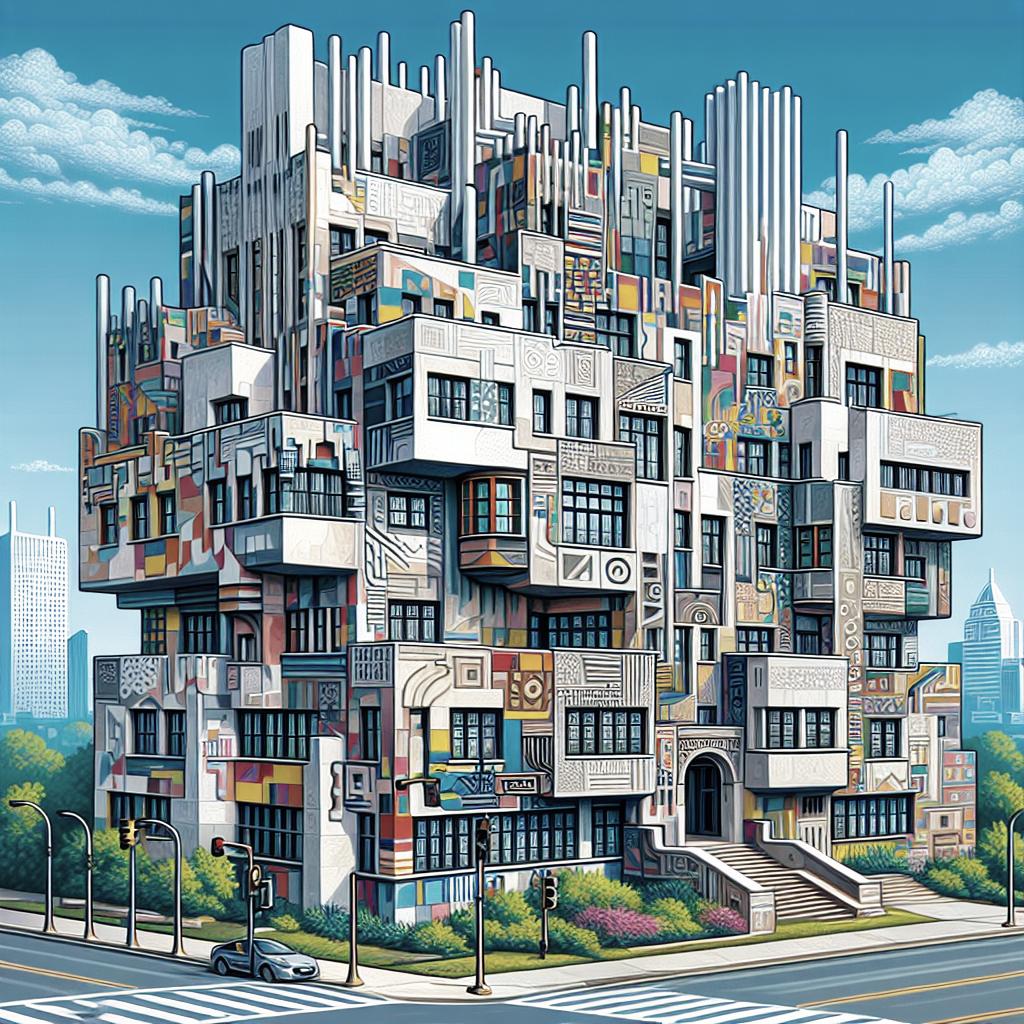
### What is Postmodern Architecture? In the ever-evolving landscape of architectural design, few movements stand out as distinctly as postmodern architecture. Emerging as a reaction to the rigidity and formality of modernist principles, postmodern architecture is characterized by its eclectic style, embrace of diversity, and a penchant for irony and playfulness. Unlike its predecessors, it eschews the idea of uniformity in favor of embracing historical references and cultural symbolism. In this blog post, we will explore the roots and history of postmodern architecture, dive into its defining elements and unique characteristics, and highlight some of the most famous examples and architects. Along the way, we’ll see how this architectural style reflects broader cultural changes and interpretive thinking that defy simple categorization. — ### History of Postmodern Architecture Postmodern architecture arose during the late 20th century, often regarded as an era characterized by questioning and challenging established norms across numerous disciplines. In architecture, this movement began taking shape in the late 1960s and early 1970s as a response to modernism’s stark minimalism and functionalism. Architects and designers grew weary of the homogeneity of modern architecture, which often led to the creation of monolithic structures devoid of personality or context. Postmodernism sought to reintroduce architectural ornamentation, historical reference, and a playfulness that celebrated complexity and contradiction. Key figures such as Robert Venturi and Denise Scott Brown paved the way for postmodern architecture with their seminal work, “Learning from Las Vegas,” published in 1972. This text critiqued modernist dogma and explored the efficacy of incorporating elements from vernacular culture and historical styles. The movement was further fueled by architectural theorists like Charles Jencks, whose writings helped delineate its distinct principles and global rise. By the 1980s and 1990s, postmodern architecture had gained mainstream acceptance, significantly influencing urban design and public spaces worldwide. Despite its initial resistance from certain architectural circles, postmodern architecture flourished by championing diversity and embracing collaboration between diverse cultural narratives. It bridged the gap between past and present, allowing architects to craft spaces that were both innovative and contextually aware. As a result, the movement became a testament to the power of architectural storytelling and a reflection of an increasingly pluralistic society. — ### Defining Elements and Characteristics of Postmodern Architecture Postmodern architecture is best understood through its departure from modernist principles and its embrace of pluralism and eclecticism. A defining element is the rejection of minimalism and the introduction of ornamentation and decorative elements that don’t necessarily have a functional purpose. This reintroduction of ornamentation draws from various historical styles, often amalgamated to create buildings that feel both familiar and surprising. The movement is characterized by its playful sense of irony. Postmodern architects often use unexpected materials, shapes, and colors, deliberately subverting traditional aesthetics to prompt thought and conversation. This irony is expressed through the inclusion of whimsical and exaggerated elements that seem almost satirical of classical design norms. Elements like broken pediments, distorted scales, and unusual patterns are frequent, reflecting a deliberate blending of high and low culture. Contextual integration is another hallmark of postmodern architecture. Architects strive to design buildings that resonate with their surroundings and the cultural context they inhabit. This often involves marrying elements from local history, vernacular styles, and cultural motifs, resulting in structures that feel inherently connected to their specific location. This approach allows for buildings that are rich in narrative and symbolic meaning, offering more than just aesthetic value. — ### Famous Examples of Postmodern Architecture and Architects Several iconic examples showcase the diversity and creativity inherent in postmodern architecture. The Piazza d’Italia in New Orleans, designed by renowned architect Charles Moore in 1978, exemplifies the movement’s playful spirit. Its design features classical elements such as columns and arches, reinterpreted through bold colors, playful forms, and an unexpected use of space. This open-air plaza is both a celebration of Italian-American culture and a critique of traditional architectural forms. The Portland Building in Portland, Oregon, is another celebrated example, designed by Michael Graves in 1982. This building is often cited for its use of color, symbolic motifs, and incorporation of historical references. With its famous teal bands and terrazzo floors, the Portland Building represents a break from the glass-and-steel modernist aesthetic, providing a new blueprint for urban office buildings. Among the architects who have contributed significantly to the movement is Robert Venturi, who is often credited with coining the term “less is a bore,” thereby challenging the “less is more” philosophy of modernism. Venturi’s Vanna Venturi House in Pennsylvania is notable for its non-traditional facade and playful reinterpretation of traditional house shapes, making it a cornerstone of postmodern residential architecture. These instances and architects illustrate that postmodern architecture is not merely a style, but a dialogue—one that involves the past, present, and future. It’s an invitation to reconsider the narratives we embed in our urban landscapes and a demonstration of how architecture can be both practical and poetic. — ### Future Prospects Postmodern architecture continues to influence new wave architectural designs, challenging architects to straddle the line between innovation and historical reverence. As architectural philosophies continue to evolve, the principles of postmodernism encourage creative storytelling through design, pushing the boundaries of how spaces are conceptualized and experienced. As cities worldwide grapple with issues of sustainability and urban sprawl, the core tenets of postmodern architecture—a focus on context, diversity, and narrative—remain relevant, offering pathways for innovative solutions. Architects today continue to draw upon the lessons of postmodernism, ensuring that future structures remain vibrant, adaptable, and resonant with both their inhabitants and environments. “`html
| Section | Key Points |
|---|---|
| What is Postmodern Architecture? | Eclectic style, reaction to modernism, embrace of diversity, irony, historical references. |
| History of Postmodern Architecture | Emerged in late 20th century, reaction to modernism, influenced by theorists like Venturi and Jencks, embraced pluralism. |
| Defining Elements and Characteristics | Ornamentation, irony, contextual integration, eclecticism, narrative and symbolism. |
| Famous Examples and Architects | Piazza d’Italia, Portland Building, Robert Venturi’s contributions, importance of storytelling and cultural integration. |
| Future Prospects | Influence on new architectural designs, focus on storytelling, sustainability, and urban challenges. |
“`