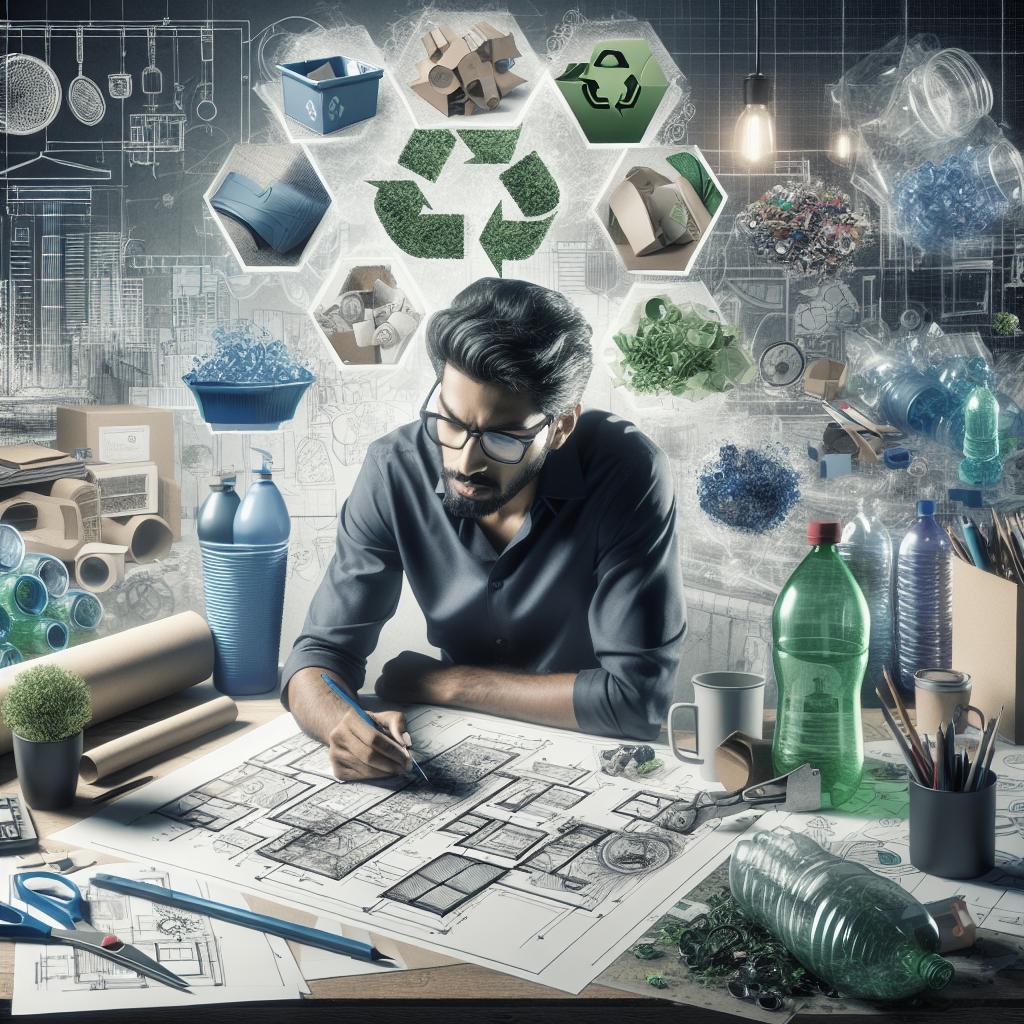
Designing with Recyclability in Mind: A Comprehensive Guide Environmental sustainability is more than just a buzzword—it’s an imperative for our future. In the realm of design, crafting products with recyclability in mind necessitates not only creativity but also conscious foresight. This approach ensures that products from textiles to electronic goods have a minimal environmental footprint at the end of their lifecycle. In this blog post, we delve into the concept of designing with recyclability in mind, explore its importance, and guide you through practical steps to implement it in your design process. We will break down the recycling process for textile products, discuss strategies for incorporating recyclability into designs, and provide a content list to keep your efforts organized. Additionally, we’ll offer related resources to further your understanding and close with a summary of the key points discussed. ## What is it? Designing with recyclability in mind involves creating products that are easier to recycle, reducing waste and promoting the circular economy. At its core, it requires designers to consider a product’s entire lifecycle—from material selection to manufacturing processes, use, and eventual disposal. This approach extends beyond mere aesthetics or functionality; it’s about integrating environmental considerations into the core philosophy of product development. Understanding and designing for recyclability means anticipating the challenges that a product might face during its recycling stage. It means selecting materials that can be easily disassembled, opting for mono-materials when possible, and minimizing the use of harmful chemicals that can hinder recycling processes. In essence, it’s about thinking big and broad, while paying attention to the smallest of details to ensure that every component of a product contributes positively to environmental sustainability. ## Why do it? The importance of designing with recyclability in mind is multifaceted. From an environmental perspective, promoting recyclability helps in reducing pollution, conserving resources, and minimizing the energy needed for waste management processes. It also allows for the more efficient reuse of materials, ensuring that the life cycle of a product does not end at a landfill. For businesses, embracing recyclable design can significantly enhance brand reputation, demonstrating a commitment to sustainability and corporate responsibility. As consumer awareness of environmental issues grows, so too does the demand for eco-friendly products. Companies that prioritize recyclability in design are not only catering to consumer demand but are also preparing for future regulations and market trends that increasingly favor sustainable practices. Furthermore, designing with recyclability in mind fosters innovation. By challenging traditional design thinking, it encourages designers to explore new materials, techniques, and solutions that can lead to groundbreaking products and new market opportunities. ## How to do it? Designing for recyclability requires an actionable framework and a deliberate strategy across all stages of the product lifecycle. It begins with choosing sustainable materials that can be easily processed at the end of a product’s life. For instance, materials like PET plastics or certain metals have well-established recycling streams. Designers should consider modular designs that allow for easy disassembly and segregation of different material types. This step is crucial in ensuring that each material can be affordably processed for recycling without contamination. Colorless or single-material components are preferred to avoid the complications involved in separating mixed materials or dyes. Additionally, effective labeling and documentation can greatly assist in recycling efforts. Labels should clearly indicate materials used and instructions for dismantling the product at the end of its life. Introducing innovations such as barcode scanning that provides recycling information is also a pragmatic advancement. ### 1. How are textile products recycled? Textile recycling involves separating usable fibers from discarded garments and reprocessing them into new materials. This can either be through mechanical recycling, where fabrics are shredded back into fibers, or chemical recycling, which involves breaking down polymers to recover raw materials. Each method has its own advantages and tradeoffs in terms of energy consumption and material yield. Textile recycling starts with collecting, sorting, and grading the clothing. Once separated, textiles are processed based on their fiber type. Cotton can be transformed into regenerated yarns, while synthetics like polyester may be melted and re-extruded. These recovered materials are then used to create new textiles, allowing for a reduction in raw material use and carbon emissions associated with producing new fabric. The intricacies lie in ensuring that textiles are designed to be easily deconstructed, which simplifies the recycling process. Avoiding complex patterns, unnecessary embellishments, and mixed-material fabrics can enhance recyclability, making it easier to recover fibers and reduce waste. ### 2. How to approach design for recyclability? Approaching design for recyclability starts at the conceptualization phase. This requires a mindset rooted in innovation and adaptability, looking to both traditional wisdom and new advancements in materials science. Incorporating lifecycle thinking is crucial. This involves forecasting how the product will perform during use, how easily it can be maintained and repaired, and ultimately, how simply it can be deconstructed for recycling. Working closely with material scientists and recycling experts during the product development phase can provide insights into the latest recyclable materials and processes. Prototyping with recyclability in focus often involves iterating on the simplification, such as reducing the number of parts, using snap-fit designs instead of adhesives, and ensuring components are easily separable. Moreover, collaboration is key. Engaging with stakeholders from diverse fields, like supply chain managers and recycling facility operators, can unearth practical insights into the recyclability of a product. This collaborative approach not only enhances the product’s sustainability credentials but also aligns with industry best practices. ### CONTENT LIST 1. Define recyclability in the context of product design. 2. Importance of sustainability and circular economy. 3. Environmental and business benefits of recyclable design. 4. Steps to integrate recyclability in the design process. 5. Textile recycling methods and their implications on design. 6. Practical strategies for recyclable design. 7. Role of collaboration in sustainable innovation. ### Related Resources 1. Cradle to Cradle: Remaking the Way We Make Things by William McDonough & Michael Braungart. 2. Ellen MacArthur Foundation’s reports on circular economy and sustainable design strategies. 3. TED Talks and webinars focusing on innovative recycling technologies and design thinking. 4. Online courses and certifications in sustainable design and eco-friendly material selection. 5. Industry blogs that showcase case studies and interviews with leaders in sustainable design. ## Footnotes 1. Definition of recyclability adapted from the U.S. Environmental Protection Agency. 2. Insights on textile recycling drawn from studies conducted by the Council for Textile Recycling. 3. Material selection advice based on research from the Materials Innovation Institute. Summary of Main Points | Section | Key Points | |————————————|—————————————————————————————————-| | What is it? | Integration of recyclability in design, focusing on lifecycle and material use. | | Why do it? | Environmental and business benefits, enhanced reputation, alignment with consumer demand. | | How to do it? | Frameworks for selecting materials, modularity in design, innovative labeling. | | How are textile products recycled? | Processes of mechanical and chemical recycling, and designing textiles for ease of recycling. | | How to approach design for recyclability? | Importance of lifecycle thinking, prototyping, and collaborative innovation. | | Content List & Related Resources | Overview of content topics and resources for further learning. | By contemplating the environment at the heart of design, we can create a future where products seamlessly integrate into the fabric of a sustainable society.
Designing for the Future: Embracing Recyclability in Your Creations
 By
/ October 6, 2025